

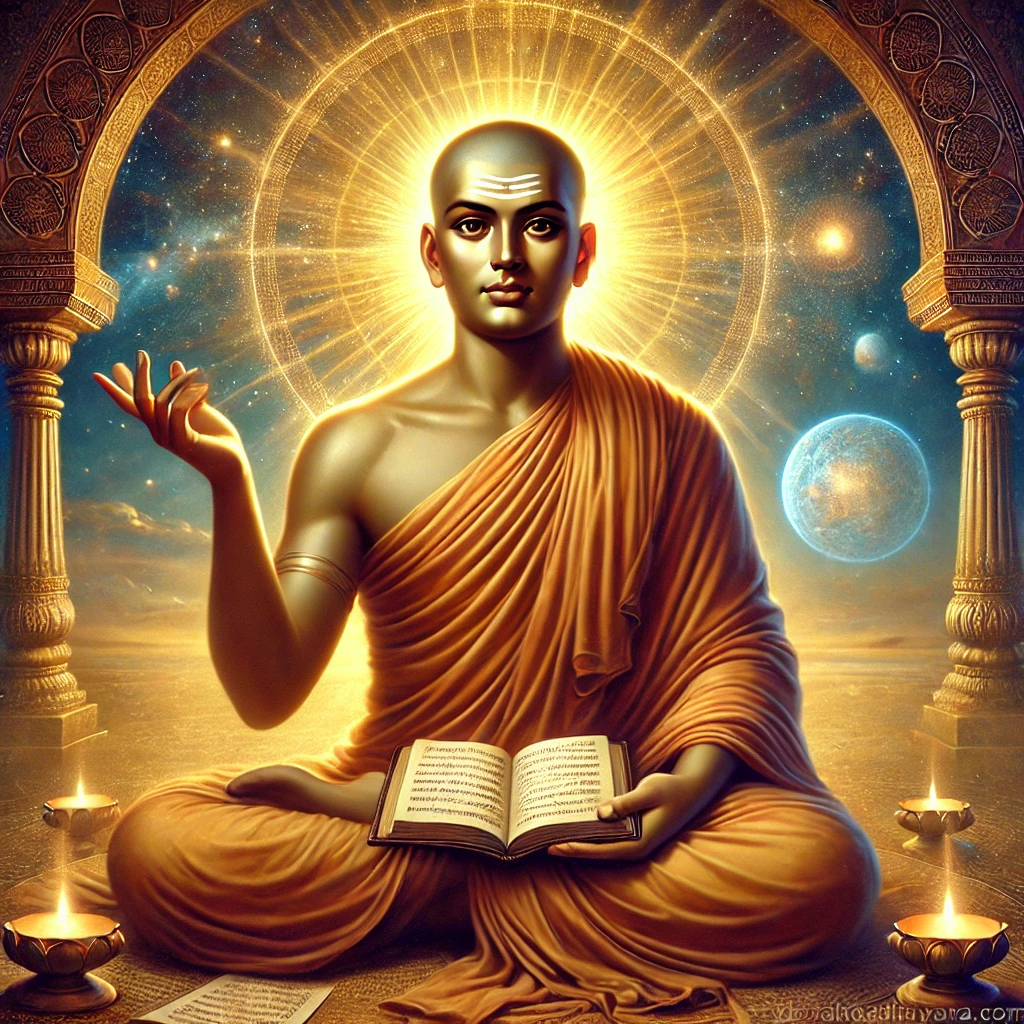
kapila(कपिल)
Kapila: The Sage of Sankhya Philosophy and Enlightenment
Kapila is a revered sage in Hindu tradition, best known as the founder of the Sankhya (Sāṁkhya) philosophy, one of the six classical schools of Indian thought. He is regarded as an enlightened yogi, a great philosopher, and sometimes even as an incarnation of Lord Vishnu. His teachings emphasize the distinction between Purusha (consciousness, the self) and Prakriti (nature, material world), laying the foundation for many later spiritual and philosophical traditions in India.
1. The Meaning and Identity of Kapila
The name Kapila comes from Sanskrit, meaning "tawny" or "reddish-brown," possibly referring to his divine radiance. He is often depicted as a sage with golden or reddish skin, deep wisdom in his eyes, and a powerful presence that transcends time.
Kapila is sometimes considered an avatar of Vishnu, particularly in the Bhagavata Purana, where he is described as a divine teacher born to restore the lost knowledge of self-realization. However, in Vedic and philosophical texts, he is primarily seen as a human sage and a profound thinker.
2. Kapila in Hindu Scriptures
a. Kapila in the Vedas and Upanishads
Though Kapila is not directly mentioned in the early Rigveda, later Vedic texts, such as the Shatapatha Brahmana, refer to his wisdom and knowledge. The Maitrayani Upanishad also speaks of his teachings regarding the soul and liberation.
b. Kapila in the Bhagavata Purana
One of the most detailed accounts of Sage Kapila is found in the Bhagavata Purana, where he is described as the son of Sage Kardama and Devahuti. He is born as a divine child and imparts Sankhya philosophy to his mother, Devahuti, enlightening her on the nature of the self, detachment, and liberation. His discourse is one of the earliest and most profound explanations of Jnana Yoga (the path of wisdom).
c. Kapila in the Mahabharata
Kapila is also mentioned in the Mahabharata, where he is associated with great ascetic power. One famous story tells how King Sagara's 60,000 sons disturbed Kapila’s meditation, leading to their destruction by his fiery gaze. This event is linked to the story of the Ganges descending to Earth, as Bhagiratha later performs penance to bring the holy river to purify the ashes of Sagara’s sons.
3. The Sankhya Philosophy of Kapila
Kapila is credited with formulating Sankhya, one of the oldest and most influential schools of Hindu philosophy. The core principles of Sankhya include:
Dualism (Dvaita) – Sankhya distinguishes between Purusha (conscious self) and Prakriti (the material world).
Evolution of the Universe – The material world evolves through Prakriti, giving rise to 24 fundamental principles, including the mind, senses, and elements.
Liberation (Moksha) – True freedom is attained when one realizes the difference between the eternal self (Purusha) and the ever-changing material world (Prakriti), leading to detachment and enlightenment.
Though later Sankhya texts, such as the Sankhya Karika by Ishvarakrishna, refine and expand Kapila’s ideas, he is still honored as the original teacher of Sankhya philosophy.
4. The Legacy of Kapila
a. Influence on Yoga and Vedanta
Sankhya philosophy greatly influenced Yoga (as seen in Patanjali’s Yoga Sutras) and Vedanta. Concepts like gunas (sattva, rajas, tamas), detachment, and self-awareness are central to both Sankhya and later Hindu spiritual traditions.
b. Kapila as a Spiritual Guide
Kapila is often seen as a teacher of renunciation, self-inquiry, and enlightenment. His teachings on detachment and realization of the self are still relevant for those seeking higher knowledge.
5. Worship and Representation of Kapila
Kapila is rarely worshiped in temples but is respected as a rishi and philosopher. Some sites, like Ganga Sagar in West Bengal, are associated with his legend. He is usually depicted as:
A golden-skinned or reddish sage with radiant eyes.
Wearing simple ascetic robes and seated in deep meditation.
Holding scriptures or teaching with a raised hand.
6. Conclusion
Sage Kapila stands as a pillar of Indian philosophical thought, guiding seekers toward wisdom, self-realization, and liberation. His teachings on the nature of reality, the soul, and the material world continue to inspire scholars, spiritual seekers, and yogis. Whether viewed as an avatar of Vishnu or a profound human sage, his influence remains timeless, shaping the spiritual landscape of India for millennia.